The Rating user block allows you to collect user ratings with flexible scales, customizable icons, and various display options. It’s perfect for feedback collection, satisfaction surveys, NPS scores, and any scenario requiring numerical evaluation from users.Documentation Index
Fetch the complete documentation index at: https://docs.quick.bot/llms.txt
Use this file to discover all available pages before exploring further.
- Flow
- Bot

Configuration Options
Scale Settings
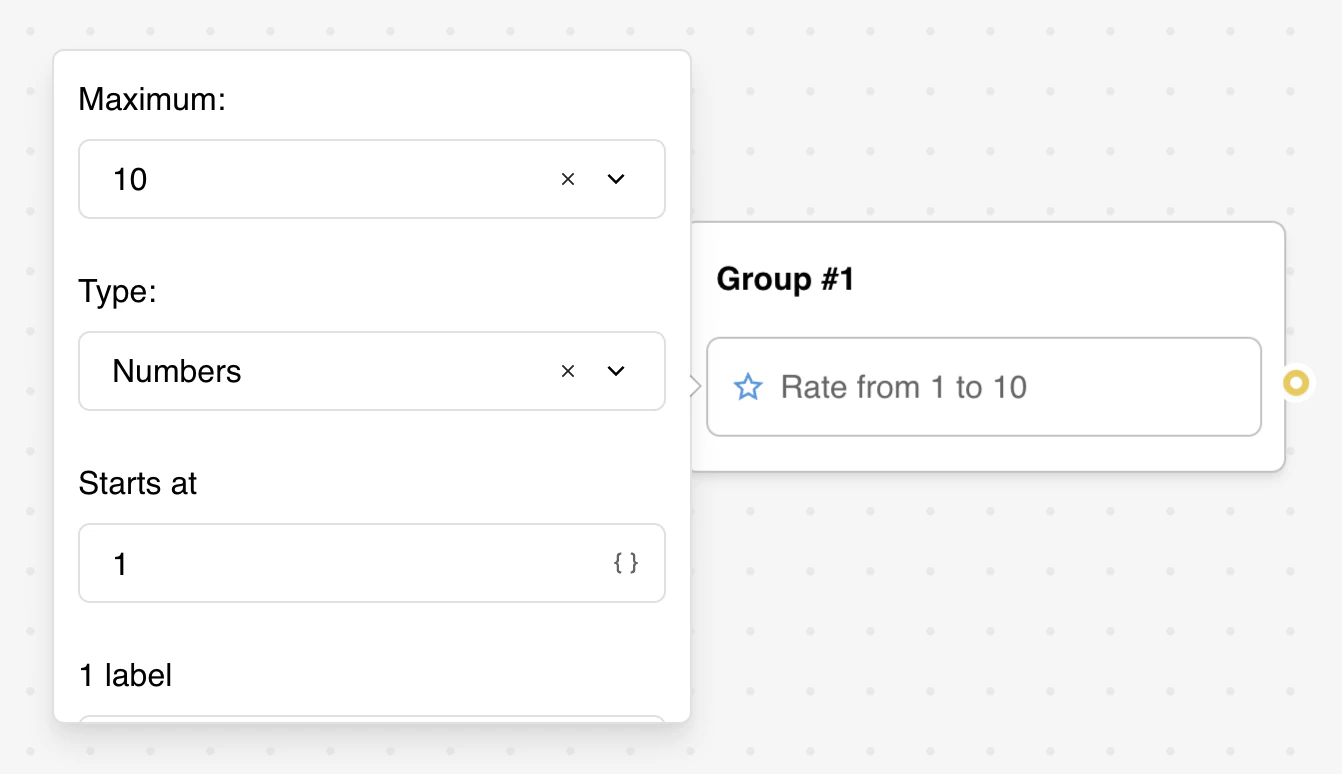
- Maximum Rating: Choose from 3 to 10 rating options
- Display Type: Select between icons (stars) or numbers
- Starting Value: For number displays, set the starting number (supports variables)
- Custom Range: Create scales like 1-10, 0-5, or any custom numerical range
Visual Customization
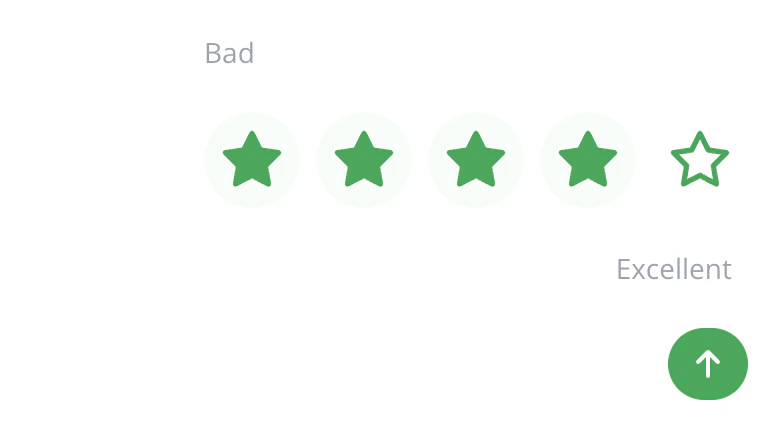
- Icon Type: Use default stars or custom SVG icons
- Custom SVG: Upload custom icons for brand consistency
- Button Labels: Add descriptive text for lowest and highest ratings
- Submit Button: Customize the submission button text (supports variables)
Interaction Modes
- One-Click Submit: Enable immediate submission upon selection
- Confirmation Mode: Require explicit submit button click after selection
- Label Positioning: Position descriptive labels below rating options
Variable Integration
- Save Answer: Choose a variable to store the rating value
- Variable Labels: Use variables in button labels and descriptions
- Dynamic Ranges: Set rating ranges using variable values
Advanced Features
Custom Icon Integration
Replace default star icons with custom SVG graphics:- SVG Support: Full SVG markup support for icons
- Brand Consistency: Use your brand’s iconography
- Multiple States: Icons show selected/unselected states
- Scalable Graphics: SVG icons scale perfectly across devices
Flexible Rating Scales
Support for various rating methodologies:- Standard Scales: 1-5, 1-10 star ratings
- Custom Scales: 0-10, 1-7, or any preferred range
- NPS Scale: Built-in Net Promoter Score (0-10) configuration
- Percentage Scales: Use 0-100 or other percentage-based ratings
One-Click vs. Confirmation Modes
- One-Click: Users submit immediately upon selecting a rating
- Confirmation: Users select rating then click submit button
- Hybrid Approach: Toggle between modes based on context
- User Experience: Choose based on form complexity and user expectations
Variable-Driven Configuration
- Dynamic Scales: Set maximum rating using variables
- Contextual Labels: Customize labels based on previous responses
- Conditional Display: Show different rating scales based on user data
- Integration Ready: Rating values work seamlessly with external systems
Common Use Cases
Net Promoter Score (NPS)
Configure the rating block for standard NPS collection:- Scale: 0-10 numbers
- Left Label: “Not likely at all”
- Right Label: “Extremely likely”
- One-Click: Enabled for quick feedback
Customer Satisfaction (CSAT)
- Scale: 1-5 stars or numbers
- Left Label: “Very unsatisfied”
- Right Label: “Very satisfied”
- Custom Icons: Use emoji or custom satisfaction icons
Product Reviews
- Scale: 1-5 stars
- Left Label: “Poor quality”
- Right Label: “Excellent quality”
- Confirmation Mode: Let users review their rating before submitting
Custom Icon Examples
To insert a custom icon, use complete SVG markup:Best Practices
Scale Selection
- Use 1-5 for simple satisfaction ratings
- Use 1-10 for more nuanced feedback collection
- Use 0-10 for Net Promoter Score compliance
- Consider your audience’s familiarity with different scales
User Experience
- Provide clear labels explaining what each rating means
- Use consistent scales throughout your survey or application
- Consider one-click submission for single-question surveys
- Add confirmation mode for critical feedback collection
Data Collection
- Use descriptive variable names for rating storage
- Consider segmenting ratings by category or time period
- Plan for rating analysis and reporting needs
- Document rating scales for consistent interpretation
Visual Design
- Choose icons that clearly represent the rating concept
- Ensure sufficient contrast for accessibility
- Test custom icons across different screen sizes
- Maintain consistent visual style with your brand
Integration Examples
CRM Integration
Analytics Integration
- Track rating distributions over time
- Segment ratings by user demographics
- Monitor rating trends and patterns
- Set up alerts for low satisfaction scores
Follow-up Workflows
- Collect rating with Rating block
- Use conditional logic based on rating value
- Route low ratings to support workflows
- Route high ratings to testimonial collection
- Store ratings for analysis and reporting
Troubleshooting
Common Issues
Ratings not displaying correctly- Verify the maximum rating is set appropriately (3-10)
- Check that custom SVG icons are properly formatted
- Ensure icon SVG includes proper viewport and stroke settings
- Test display across different devices and screen sizes
- Confirm “One-click submit” toggle is enabled in settings
- Verify users understand no additional submit button is needed
- Check that rating selection triggers immediate submission
- Test on both desktop and mobile devices
- Ensure SVG markup is complete with opening and closing tags
- Check that SVG includes proper xmlns and viewBox attributes
- Verify stroke and fill properties are set correctly
- Test SVG markup in an SVG validator
- Confirm a variable is selected in “Save Answer” dropdown
- Verify variable names don’t contain special characters
- Check that rating values are being stored as expected numbers
- Test variable integration with subsequent blocks
- Verify maximum rating is within 3-10 range
- For number displays, ensure starting value is set correctly
- Check that left and right labels are appropriate for the scale
- Test that the complete rating range is functional
Display Problems
- Test rating block appearance on various screen sizes
- Ensure custom icons maintain proper aspect ratios
- Check that labels don’t overflow on mobile devices
- Verify touch targets are large enough for mobile interaction
Integration Considerations
- Rating values are stored as numbers (1, 2, 3, etc.)
- Custom starting values affect the actual stored numbers
- Multiple rating blocks should use different variables
- Consider rating scale documentation for external integrations
Performance Tips
- Simple star icons load faster than complex custom SVGs
- Limit custom SVG file sizes for optimal performance
- Test rating block responsiveness with various icon types
- Monitor loading times on mobile devices and slower connections
